Official trailer guide
Tomb Raider: Legacy of Atlantis Trailer Explained
Watch the official trailer, separate visible evidence from fan speculation, and track what it actually tells us about Lara Croft, Atlantis ruins, traversal, tomb puzzles, combat, platforms, and the February 12, 2027 launch.
- Search focusTrailer analysis
- GameLegacy of Atlantis
- LaunchFebruary 12, 2027
- Evidence ruleVisible first
What does the Legacy of Atlantis trailer confirm?
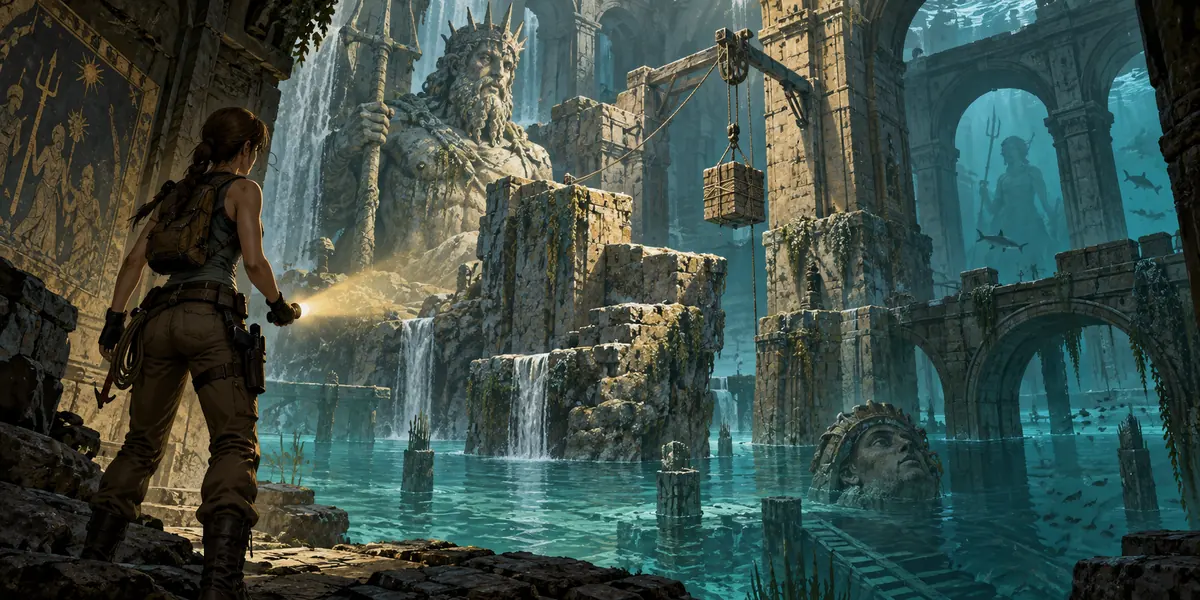
The Tomb Raider: Legacy of Atlantis trailer confirms the game's central presentation: Lara Croft explores ancient, water-soaked ruins, moves through vertical spaces, interacts with large environmental mechanisms, and faces hostile creatures with her familiar dual-pistol action. It also reinforces Atlantis as the visual and narrative frame. The trailer is useful evidence for tone, locations, animation, and broad gameplay direction, but it is not a complete walkthrough or a technical benchmark.
- Confirmed in the trailer: Lara, ancient ruins, traversal, environmental interaction, cinematic action, and creature combat.
- Strongly suggested: landmark-based tomb spaces, readable routes, puzzle rooms, and a return to exploration-first pacing.
- Still open: exact chapter order, enemy names, puzzle solutions, difficulty rules, PC settings, and final performance modes.
- Safe reading: use the trailer to understand the game's direction, not to invent release-day guide details before launch.
Watch the official Tomb Raider: Legacy of Atlantis trailer
The embedded video is the official release-date trailer already used by the TombRaider.blog wiki hub. It is presented as a source for visual observation, not as a playable demo or a substitute for an official store listing. Watch once for the overall rhythm, then replay individual moments while comparing them with the evidence notes below.
Frame-by-frame: the trailer signals worth tracking
A trailer compresses many ideas into a few seconds. The most useful way to read it is to name the visible signal first, explain the reasonable gameplay implication second, and stop before the interpretation turns into an unsupported promise. These four signals connect the trailer to the official image language already documented elsewhere on the site.
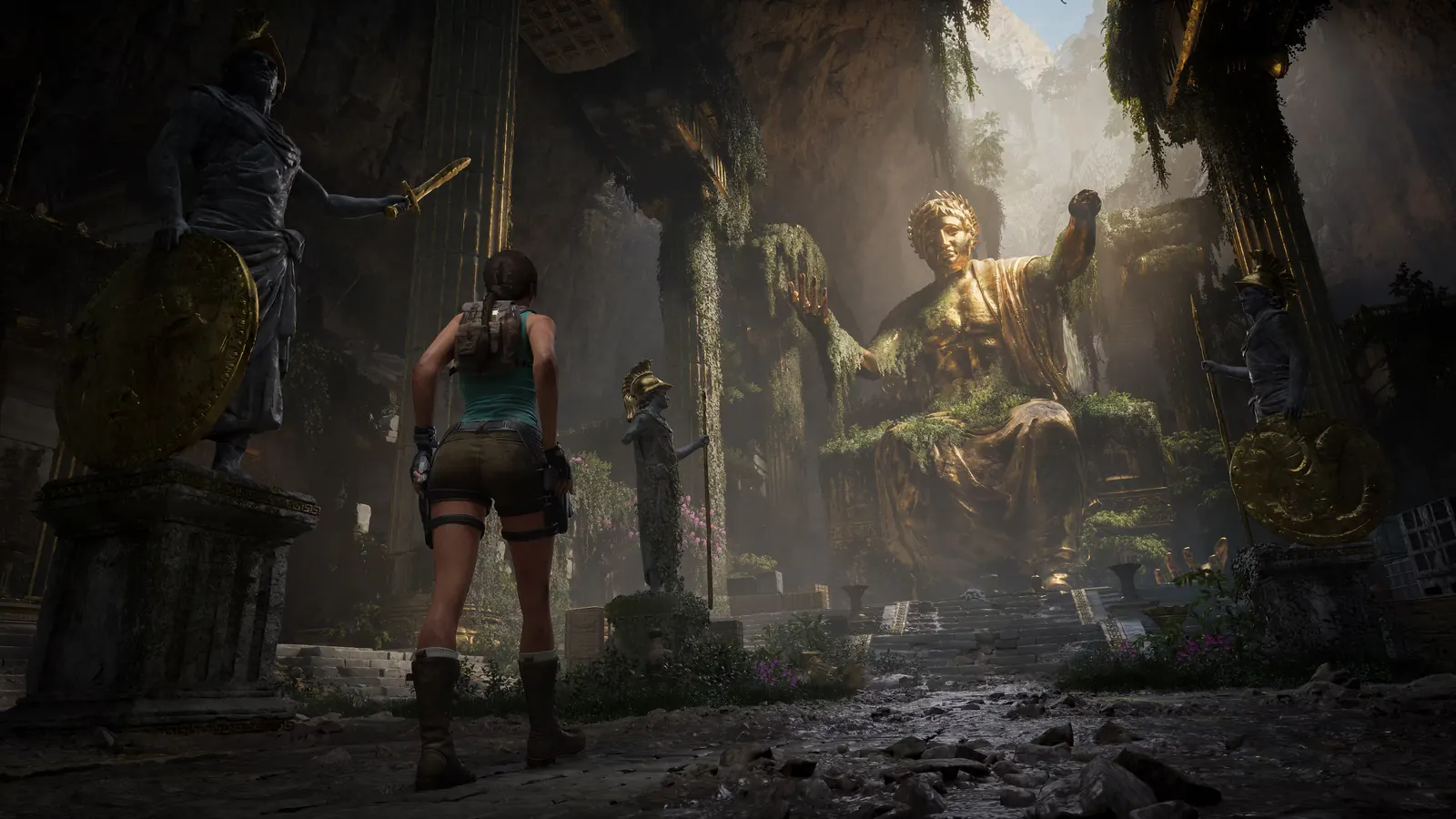
Atlantis is presented as a place to read
The trailer gives the ruins enough scale, water, stonework, and vertical framing to function as more than background scenery. Large statues, broken platforms, and bright openings create landmarks that can help players orient themselves. That supports an exploration-led reading, but it does not prove an open world, a hub structure, or unrestricted route choice.
Movement is tied to visible surfaces
Climbing, ledges, ropes, drops, and jumps appear as part of the visual grammar. The trailer therefore supports the expectation that players will scan rooms for a route and use Lara's movement tools to connect spaces. It does not yet confirm the exact control scheme, stamina rules, accessibility options, or how much assistance the game provides.
Large mechanisms frame the tomb challenge
The mechanical imagery suggests that tomb challenges will be built around objects, timing, movement, and cause-and-effect relationships. That is a strong reason to expect environmental puzzles, but the trailer cannot provide a safe solution guide. Mechanism names, reset states, optional rooms, and reward structures should wait for official previews or the released game.
What the official images add to the trailer reading
The trailer moves quickly, while a still image lets us inspect the design language more carefully. The official puzzle screenshot below is especially useful because it shows how the game communicates an interaction: Lara, a rope, a large mechanism, and a room whose structure suggests a relationship between movement and outcome.
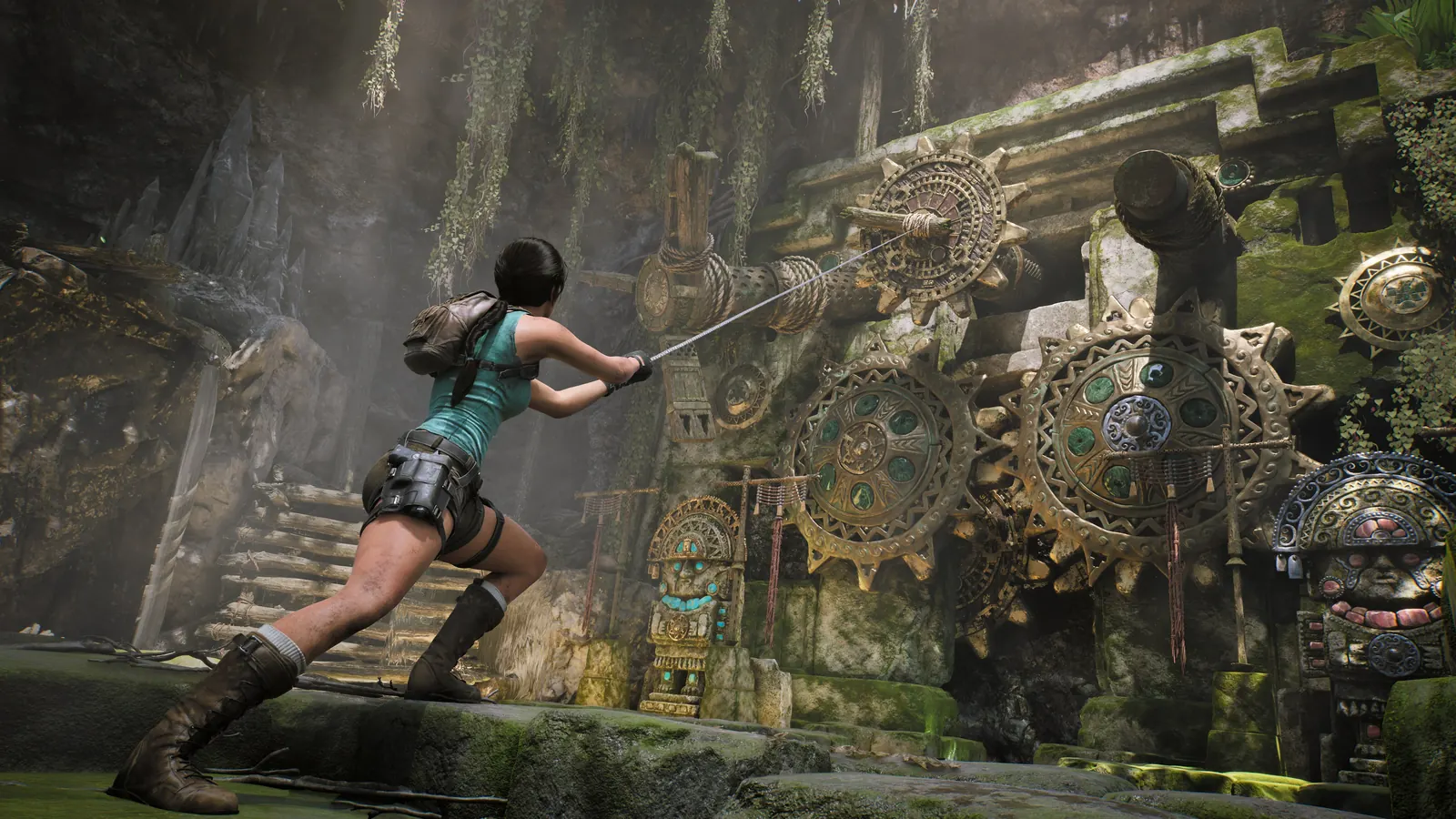
Read alongside the trailer, this image supports a careful conclusion: Legacy of Atlantis wants its ruins to look interactive and legible. The player is given a focal object, a clear character position, and a strong sense of mechanical scale. That is more useful than claiming a specific puzzle system. A screenshot can show what is on screen; only hands-on footage or the final build can show how the room behaves when a player pulls, climbs, fails, resets, or chooses a different route.
| Visible signal | What it supports | What it does not prove |
|---|---|---|
| Large statues and layered ruins | Landmark-led exploration and a strong ancient-world identity | A named location, open-world structure, or exact chapter |
| Ropes, ledges, and vertical drops | Traversal is central to the presentation | Controls, stamina, route freedom, or accessibility settings |
Confirmed facts versus reasonable inference
Trailer pages become unreliable when every visual detail is rewritten as a feature promise. The table below keeps the boundary visible so readers can use this guide without confusing editorial interpretation with an official specification.
| Evidence category | Safe interpretation | Keep unconfirmed |
|---|---|---|
| Release-date trailer exists | There is an official media reference for the game's broad direction and launch messaging | A trailer is not a playable demo, a final build, or proof that every shot is captured in real time |
| Atlantis ruins dominate the imagery | Ancient architecture, water, artifacts, and tomb spaces are central to the presentation | The complete story, map size, timeline placement, or final lore explanation |
| Lara climbs, jumps, and handles mechanisms | Traversal and environmental problem-solving are important gameplay pillars | Exact moves, tool upgrades, stamina, fall recovery, or puzzle interface |
What the trailer suggests about gameplay priorities
The best trailer analysis answers the question behind the search: what kind of Tomb Raider experience is being prepared? The following signals are useful planning notes for future guides, not a replacement for launch documentation.
Landmarks should matter
Statues, waterfalls, bridges, ruins, and openings give players visual anchors. A future walkthrough should record where a route begins, what landmark confirms progress, and how to recover when a clue is missed.
Rooms may communicate through objects
The repeated use of ropes, gears, ledges, and mechanisms points toward puzzles that can be understood from the room itself. Exact steps should be added only after a verified build makes the interaction reproducible.
Combat will share the space with movement
The trailer mixes traversal, environmental scale, and creature encounters instead of isolating them into separate menus. That suggests a rhythm of explore, read, move, fight, and continue, while leaving balance details open.
How this trailer page will be updated
A pre-release trailer page should not pretend to be finished. It should make future updates easier by defining which evidence changes the answer and which claims still need verification. This approach keeps the page useful now without creating cleanup work after launch.
Add an official trailer or preview
New footage will be listed with its source, publication date, and a short note about whether it is a cinematic trailer, gameplay demonstration, platform clip, or developer presentation.
Separate shot observation from feature confirmation
A visible rope, enemy, or interface element will be described as a shot observation first. It becomes a confirmed feature only when an official page or repeatable hands-on source explains how it works.
This page does not promise a demo, an unofficial download, a leaked build, exact puzzle answers, or final PC performance. Those claims need first-party or reproducible evidence.
Official sources for trailer checks
Trailer questions