Source check
Does Tomb Raider: Legacy of Atlantis Use AI-Assisted Assets?
Here is the careful answer as of August 2, 2026: the current Steam disclosure says that some assets were created with AI assistance and then refined by human artists. That is meaningful, but it does not prove that the whole game, every screenshot, or every character was made by AI.
- Primary intentAI-assisted assets
- EvidenceSteam disclosure
- Current statusPre-release
- Reading ruleSeparate fact from inference
Quick answer: does Tomb Raider: Legacy of Atlantis use AI-assisted assets?
Yes, the current store disclosure supports a narrow version of that statement: some assets were made with AI assistance and then refined by human artists. The disclosure is not a claim that the entire game is AI-generated. It also does not identify every affected asset, name a specific model or tool, describe the production timeline, or establish that a particular screenshot was generated rather than authored through a conventional art pipeline. The safest article, post, or video should keep those boundaries visible.
- Confirmed: the Steam listing contains an AI-assisted-assets disclosure with human refinement language.
- Not confirmed: the percentage of assets involved, the exact asset categories, or the AI tools used.
- Not justified: saying the game is fully AI-made, that Lara Croft is AI-generated, or that every screenshot proves AI use.
- Best next step: check the live Steam wording and future developer statements when the listing changes.
What the current source actually says
The useful evidence is the wording attached to the live store listing, not a blurry screenshot, a social-media paraphrase, or a visual guess. Read the disclosure as a production note with a limited scope. It tells players that AI assistance appears somewhere in the asset workflow and that human artists refined the result; it does not provide a full audit of the game’s art department.
| Signal | Where to check | What it supports | What it does not support |
|---|---|---|---|
| AI-assisted assets | Current Steam store disclosure | Some game assets involved AI assistance during production. | No complete asset list or percentage is given. |
| Human refinement | The same disclosure language | Human artists remained part of the finishing or review process. | It does not explain how much manual work each asset received. |
| Official screenshots | Publisher and platform media | They show the announced visual direction and gameplay context. | A screenshot cannot identify the underlying creation tool by itself. |
| Pre-release status | Official store and publisher pages | Production details can still be clarified or updated before launch. | Do not turn an evolving disclosure into a final technical report. |
Why “AI-assisted” is narrower than “AI-generated”
The distinction matters because search results often compress several different production ideas into one dramatic headline. A responsible Tomb Raider: Legacy of Atlantis guide should describe the process without implying a conclusion the source never made.
Assets are not the whole game
An asset can mean a texture, prop, background element, concept variation, material study, or another production component. The store wording does not say that the game logic, performance capture, writing, level design, or every character image was AI-generated.
Refinement is part of the claim
Human refinement signals review, selection, correction, art direction, or some combination of those steps. It does not tell us whether the final result should be treated as fully human-made or fully machine-made; it tells us the workflow included both assistance and human work.
A visual match is not proof
Players may notice strange hands, repeated ornaments, texture seams, or a familiar-looking image and suspect AI use. Those observations can motivate a question, but they are not a production record. Keep visual criticism separate from confirmed disclosure.
The listing can become more precise
A later FAQ, interview, credit note, or developer statement could identify the asset categories, explain the review process, or change the wording. This page should be updated when the source changes rather than guessing ahead of it.
What official screenshots can—and cannot—tell us
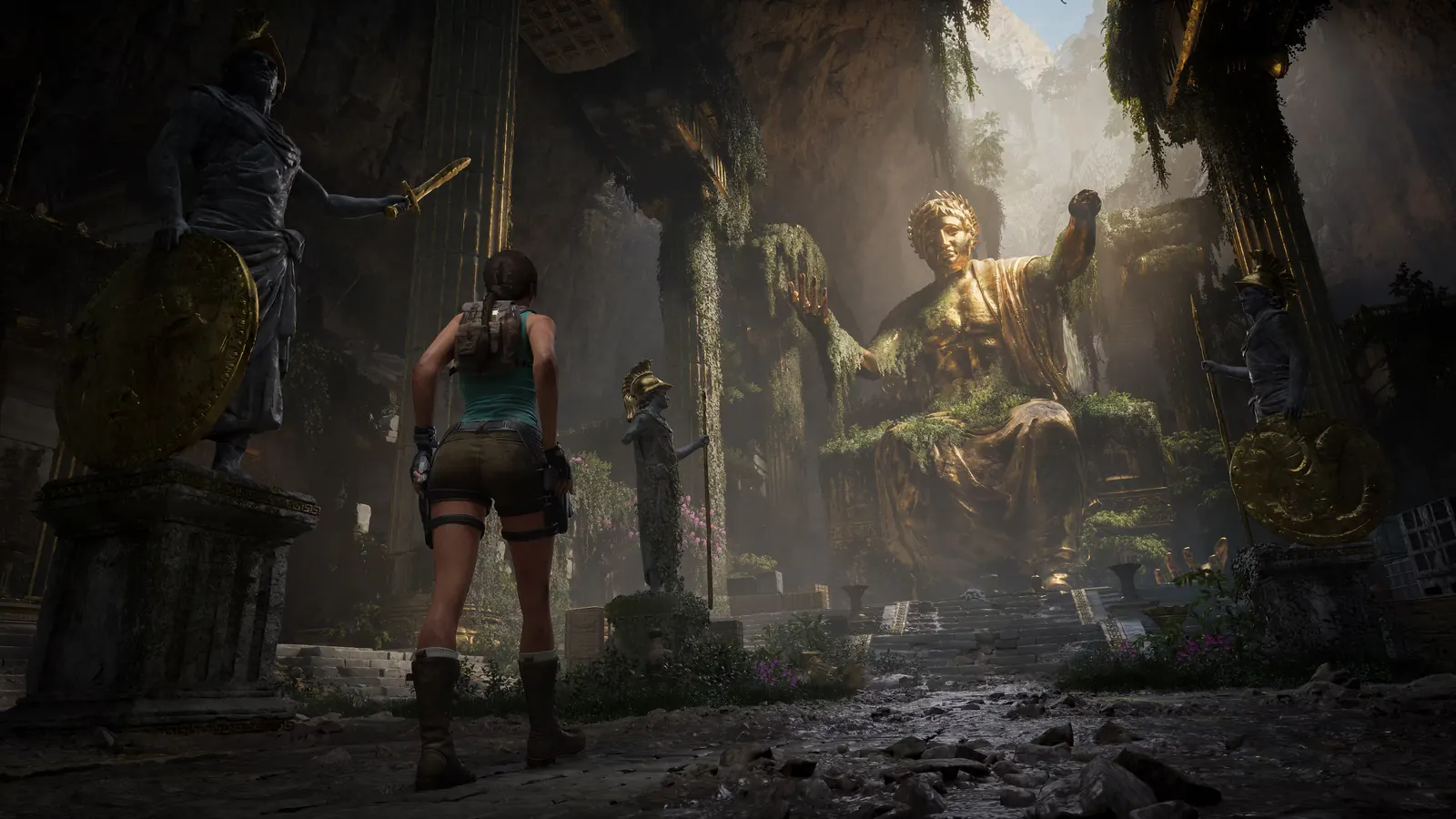
The official screenshots are still valuable because they show the visual context people are discussing: ancient machinery, dense vegetation, traversal, creatures, and the scale of the temple spaces. They are useful for understanding the game’s announced art direction, but they should not be presented as forensic evidence of AI use.
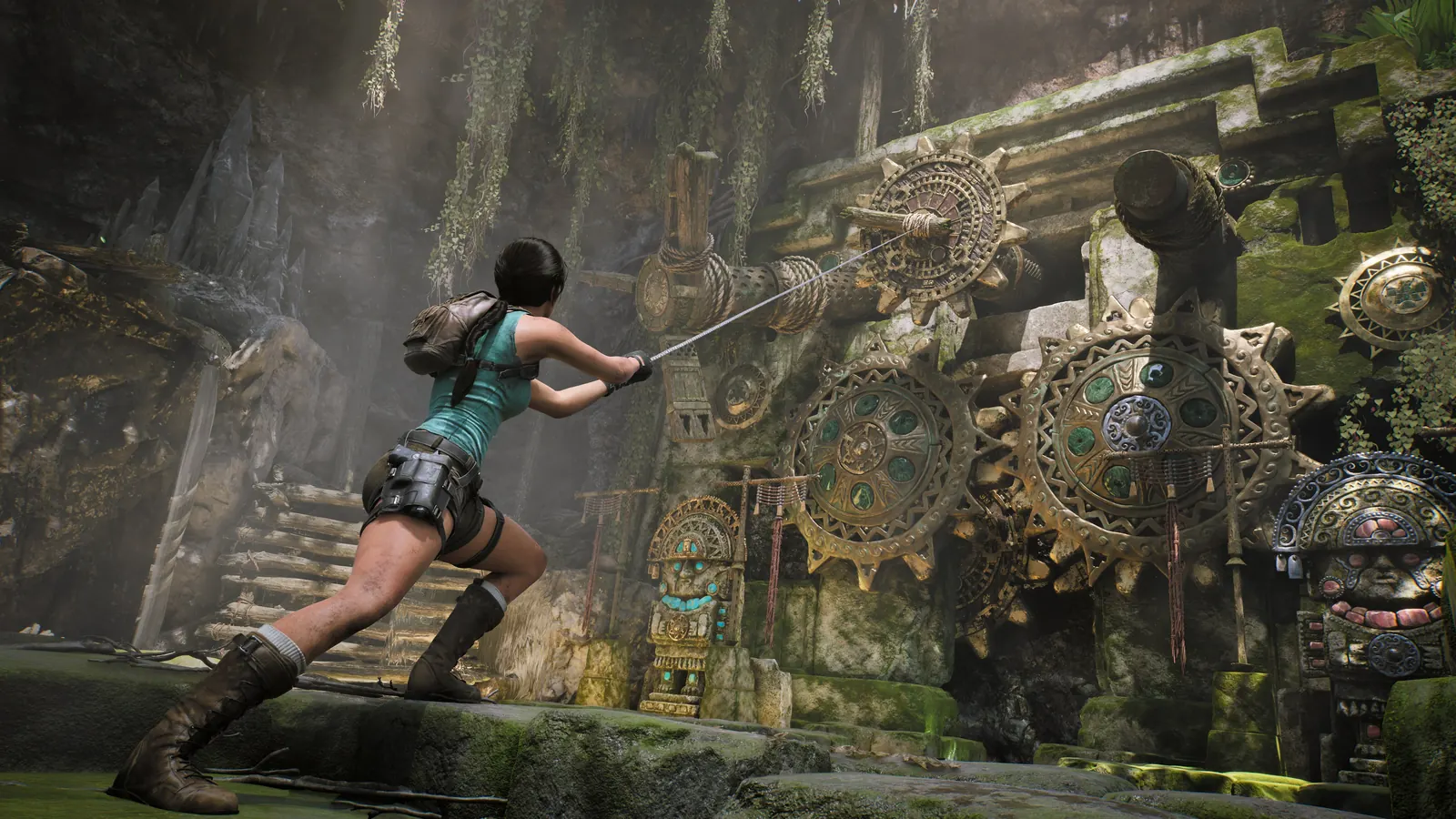
That distinction also protects the existing screenshot guide from being pulled into speculation. Use the screenshot page for image-by-image observations, the gameplay guide for trailer and mechanics context, and this page for the narrower production-disclosure question.
A simple way to picture the production question
The illustration below is an editorial concept image created for this guide, not an official screenshot and not a real developer interface. It shows why “AI-assisted” can describe one stage of a longer pipeline: references and experiments may be generated or explored quickly, while artists still select, reshape, texture, light, and integrate the final result.
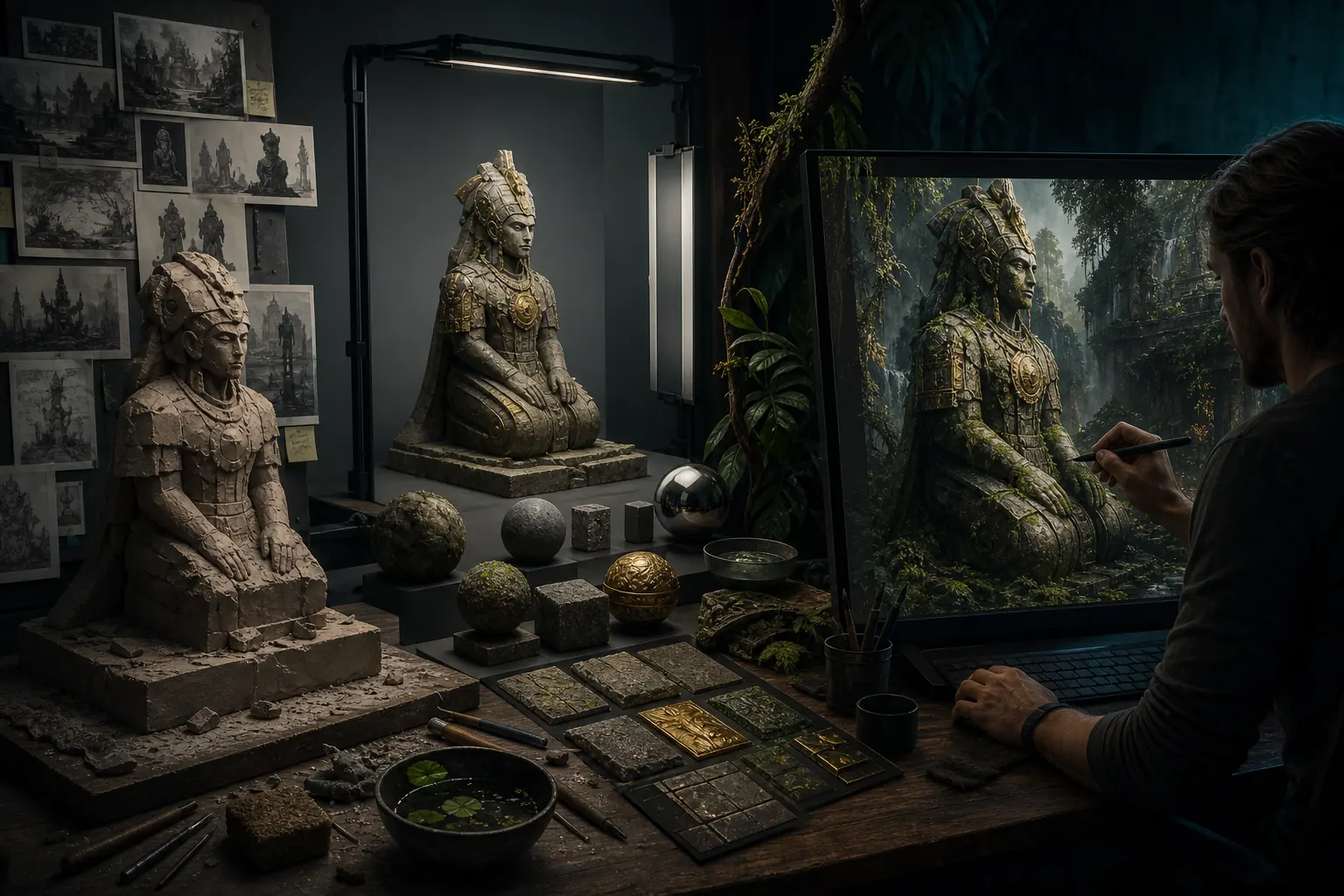
The image is explanatory only. The confirmed claim remains the store disclosure; the illustration must not be used as evidence that a specific Tomb Raider asset was created with a particular AI system.
Confirmed, plausible, and still unknown
Use this matrix when writing about the controversy or answering a reader’s question. It keeps the page useful without filling missing technical details with assumptions.
| Claim | Current status | What would justify an update |
|---|---|---|
| Some assets involved AI assistance | Confirmed by the current store disclosure | Recheck the live listing and official statements after material updates. |
| Human artists refined the assisted assets | Supported by the same disclosure | Look for a developer explanation of review, selection, and final integration. |
| The entire game is AI-generated | Not supported | Do not publish this unless an authoritative source explicitly says so. |
| A particular screenshot proves AI use | Unproven from the image alone | Require a source, production statement, or named asset record. |
| The exact tool, model, or asset percentage is known | Not disclosed in the current page wording | Wait for official technical or credit documentation. |
How to verify the next update
This topic is unusually sensitive to wording changes. When the game moves from announcement coverage toward launch, use a short source checklist instead of relying on screenshots reposted without context.
Open the live Steam page
Check the current disclosure, the last visible update, and whether the wording still refers broadly to AI-assisted assets or adds categories and process details. Record the date you checked it.
Look for a first-party explanation
Prioritize Tomb Raider, Crystal Dynamics, publisher, store, credits, interview, and official support pages. A community post can show reaction, but it should not replace a first-party production statement.
Separate source text from visual criticism
If a player spots a possible artifact, describe it as an observation and link the source image. Do not convert a texture suspicion into a claim about the entire game’s workflow.
Update the page narrowly
Change only the claim supported by the new evidence. Keep the release-date tracker, platform guides, screenshot analysis, and lore pages focused on their own search intent.
Sources and related guides
The first link is the live store source for the disclosure. The internal guides keep adjacent questions in the right place so this page does not become a catch-all rumor page.
Reader questions